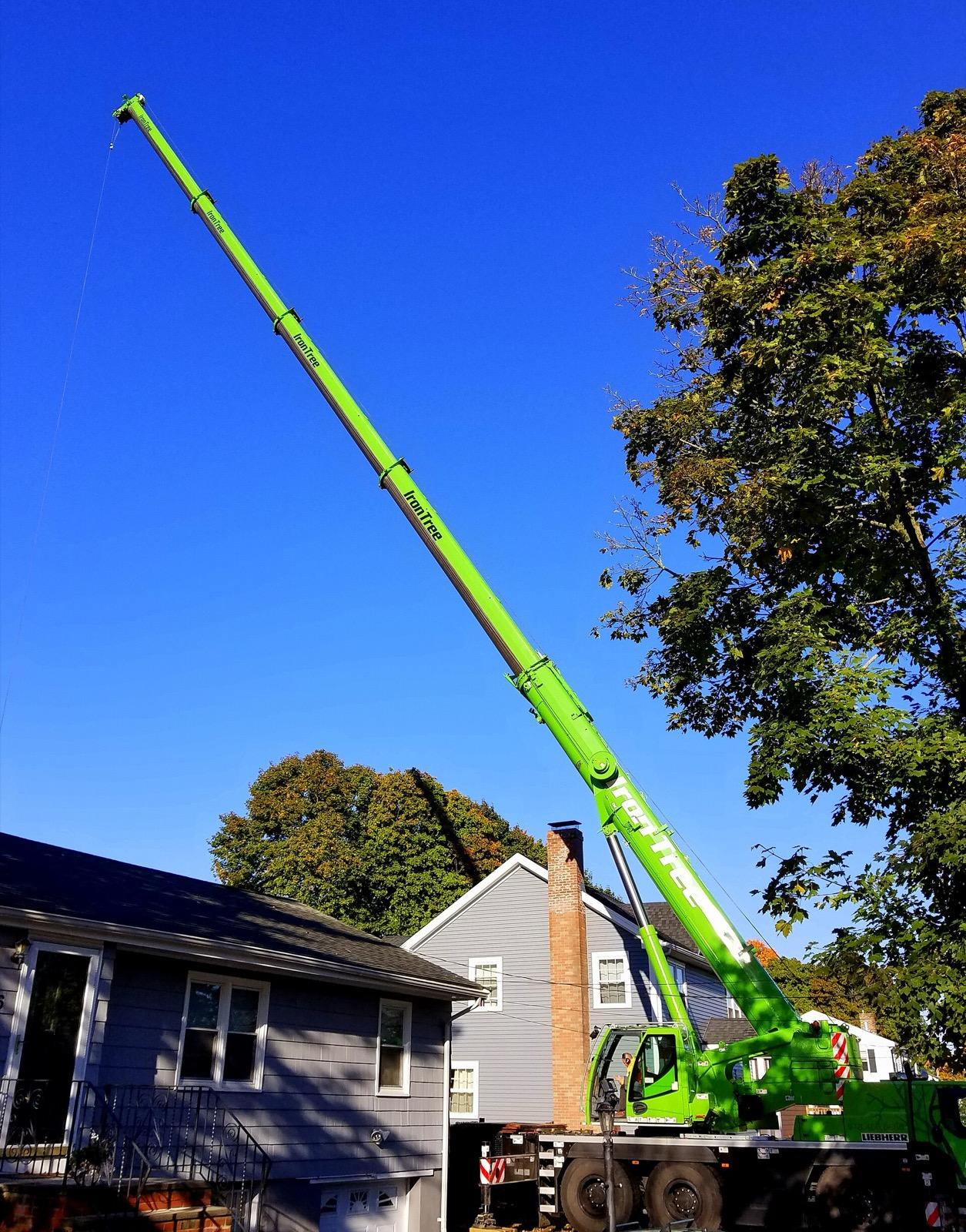
Ask a customer to “send some pictures of the tree” and you'll usually get one photo, taken from the kitchen window, of a lot of leaves. It's not their fault. They don't know what you look at, so they can't show it to you.
Ask for five specific shots instead and the picture changes. You can see how big the tree is next to the house, what's underneath it, how you'd get a chipper to it, and whether anything at the base looks wrong. That's most of what you'd have driven out to look at.
This post is about the photos themselves: which shots to ask for, what each one tells you, and what none of them can. For deciding which leads are worth a visit at all, see how to pre-qualify tree service leads.
The Five Shots
Per tree. If there's more than one, ask for them one tree at a time, so you aren't trying to work out which trunk goes with which canopy.
The wide shot
Ask for: The whole tree, top to bottom, from far enough back to include the house, fence, driveway or anything else near it. Taken standing, not zoomed in.
It shows you: Rough size, using the house or a door for scale. What's under the drop zone. Which way it leans. Whether there's room to work, or set up a lift or a crane. This is usually the most useful photo of the five.
It won't show: Anything about condition. A tree that looks fine from forty feet away can have a problem at the base.
The base
Ask for: Where the trunk meets the ground, close enough to see the soil around it, from a side that isn't hidden by shrubs. A shoe or a hand next to the trunk helps with scale.
It shows you: Trunk diameter, for the work and for any stump grinding. Fungus or mushrooms at the root flare, cracks, cavities, soil that's lifted or cracked, mulch piled against the bark, and whether the tree may already be down or cut.
It won't show: Roots below the surface, and how far any decay goes inside.
The trunk
Ask for: Up the trunk from the base to where the main branches start.
It shows you: Splits, seams and cavities, how the main stems join, vines, old hardware like cables, and whether the trunk is one stem or several.
It won't show: Decay that hasn't reached the surface, and anything on the far side of the trunk unless they send a second angle.
Looking up
Ask for: Standing near the trunk, pointing the phone straight up into the branches.
It shows you: Dead wood and broken branches hanging in the crown, how far the canopy spreads over the roof or the neighbor's yard, and whether the crown is full or thin.
It won't show: Exact heights and distances. It's a good check on condition and a poor one on size, which is why it comes after the wide shot.
The way in
Ask for: From the street or driveway to the tree, plus the gate if there is one, with roughly how wide it is.
It shows you: Whether equipment can reach the tree or everything gets carried, slopes, soft lawn, fences, pools, play sets and anything else in the path.
It won't show: How firm the ground is, and anything buried, like septic lines or utilities.
Two more when they apply
- Wires. If any lines run near the tree, one photo from the base showing where they are relative to the branches. It tells you whether the job needs the utility involved. It won't tell you the exact clearance.
- Storm damage. If something has already broken, a photo of the break and where the pieces landed, taken before anyone starts cleaning up.
Run a tree care business?
Send customers a link that walks them through these photos
Get Early Access →Branded intake link · Pre-visit brief · Estimate to invoice
Getting Photos You Can Actually Use
- Ask while they're still on the phone, or text right after. A customer who has called three companies tends to go with the first one that gives them something concrete.
- Make it a numbered list. People follow numbered steps. They don't follow "send a few pictures."
- Tell them why. "So I can get you a number without you needing to be home" is a reason to bother. "For our records" isn't.
- Daylight, with the sun behind them. A tree shot against a bright sky turns into a silhouette.
- Something for scale. A person, a door, a car or a shoe in the frame does more for estimating size than any number of close-ups.
- One tree at a time, and say which tree it is: "the oak by the back fence" is fine.
A Text You Can Copy
Edit it to sound like you, and save it somewhere you can paste it from in the truck.
What Photos Can't Tell You
Even five good photos per tree leave real gaps. They can't see inside the trunk or under the ground, so internal decay, root condition, buried utilities and soft soil all stay hidden. Exact clearance to power lines, what the neighbors will allow, and local permit rules don't show up either.
Photos are best at two things: telling you which trips are worth making, and telling you what to look at and what to bring when you go. Whether a job can be priced from them is your call, and for anything large, close to a structure, near lines or showing signs of decay, most companies still visit first.
Where ArborScout Fits
We built ArborScout's intake around these shots. Your customer opens your link on their phone and is walked through the base, the trunk and the canopy for each tree, with an optional wider shot of what's around it, plus a few questions about where the tree is, whether there's a gate and what they want done. You get the photos sorted by tree, with a pre-visit brief that flags what the photos show and what's missing, so you know what to ask before you decide how to price it.
Frequently Asked Questions
How many photos should a customer send for a tree estimate?
How do I get customers to actually send photos?
Can you tell a tree's height from a photo?
What can't you see in customer photos?
Should I give a price from photos or a range?
Run a tree care business?
Send customers a link that walks them through these photos
Get Early Access →Branded intake link · Pre-visit brief · Estimate to invoice
