Protect Your Home from Hazardous Trees.
ArborScout analyzes your tree for structural failures, root zone issues, and canopy health, then connects you with a local professional for a free estimate.
Scan My Tree NowFree · No account required · Works on any phone
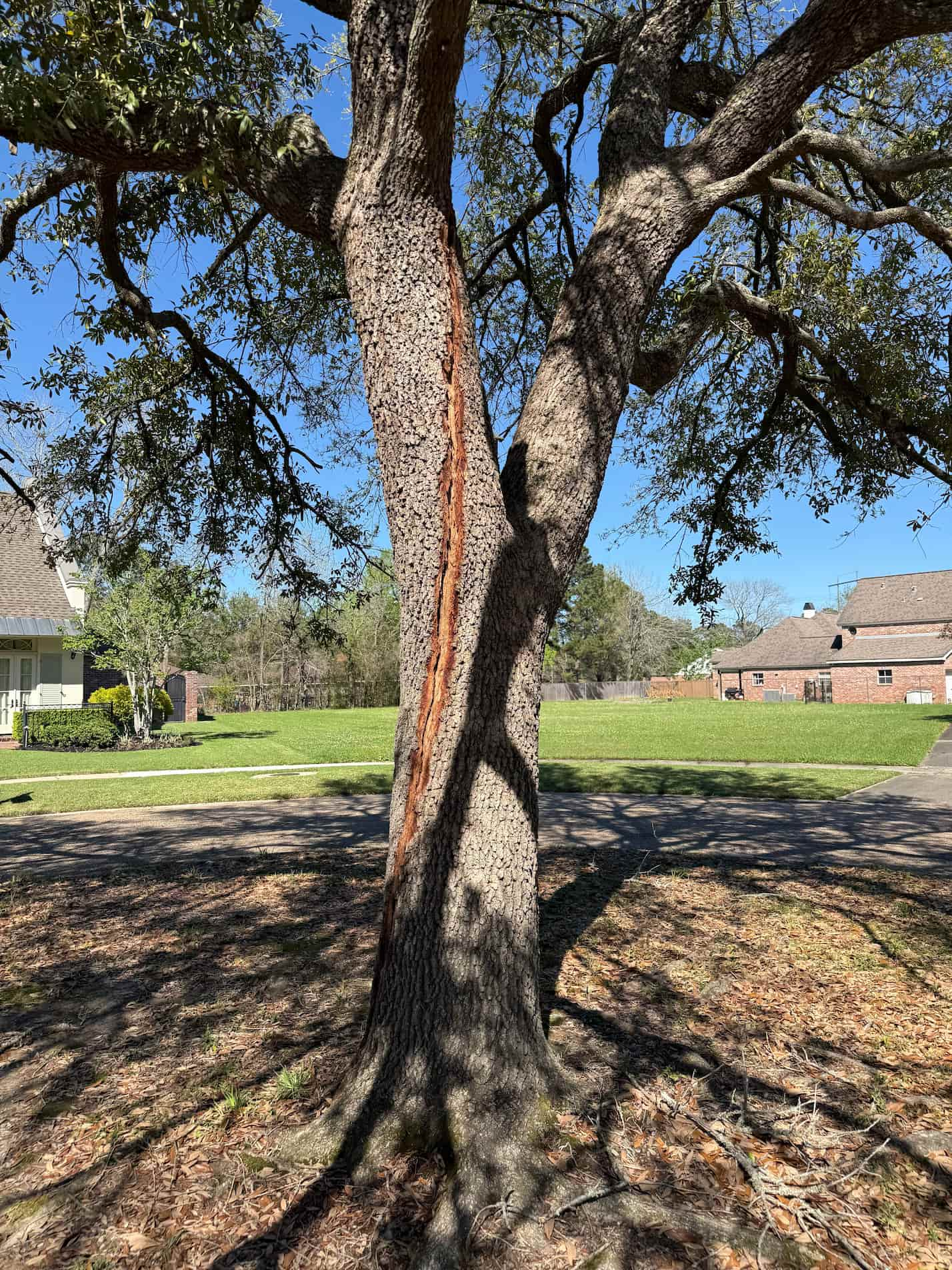
Built for Homeowners.
No specialist needed. Our AI guides you through a complete 3-shot structural audit.
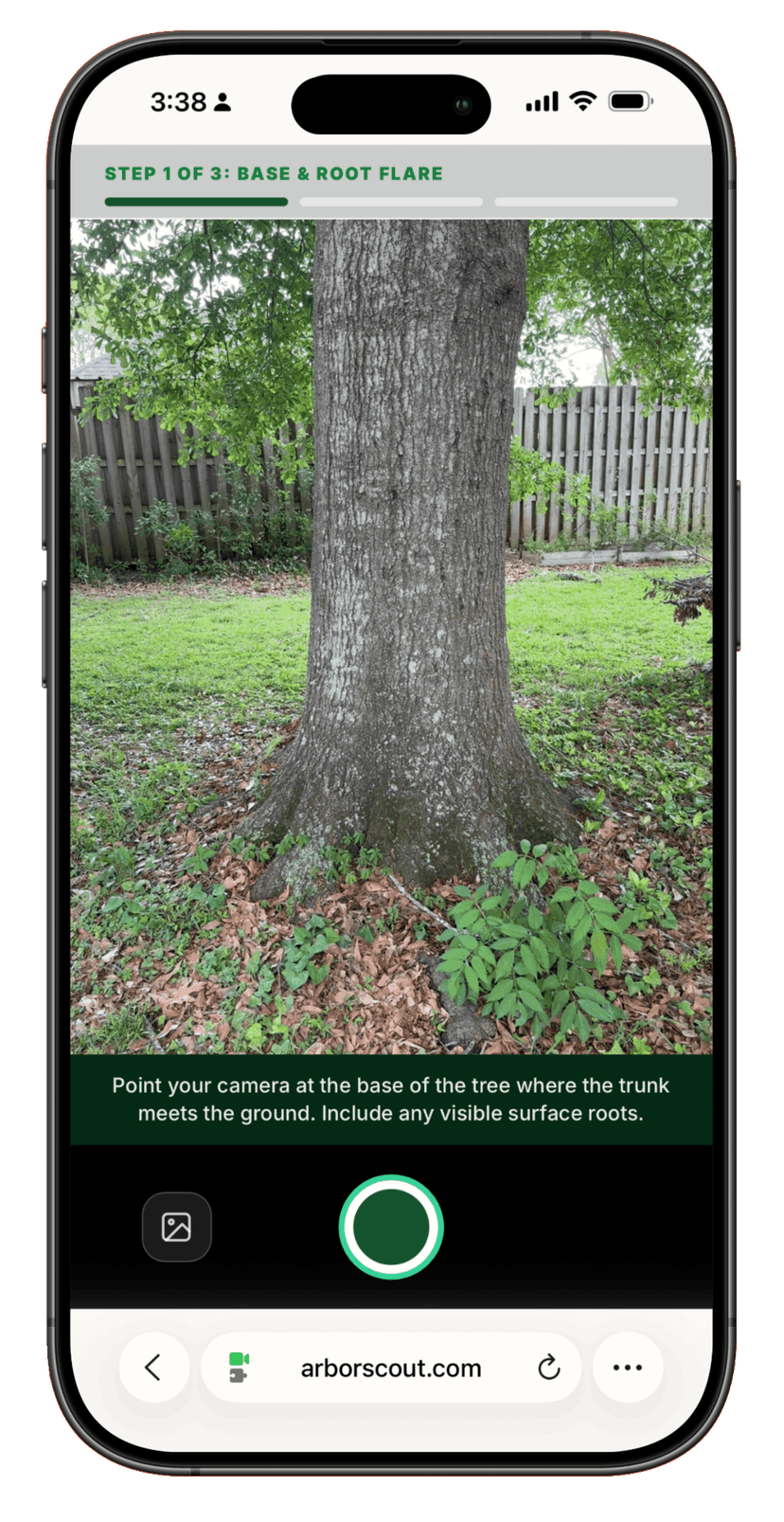
Guided Capture
Our interactive framing tools ensure you capture the critical data points: the root flare, trunk union, and upper canopy.
- Step-by-step guidance for each photo angle
- Root flare, trunk & canopy coverage required
- Works with your phone camera. No equipment needed
Visual Diagnosis
We analyze bark patterns, fungal bracket presence, and structural geometry to produce a calibrated risk score.
- 14 structural risk indicators analyzed
- ISA-inspired two-axis scoring model
- Results ready in under 60 seconds
Expert Handoff
If risk is detected, connect instantly with a local tree care professional for a free on-site assessment.
- Matched to local tree care professionals
- Your AI report shared automatically
- Free, no-obligation estimate
14 Visual Risk Indicators. Three Categories.
ArborScout analyzes structural integrity, root zone health, and canopy condition: the same dimensions a tree care professional evaluates on-site. Across three photos, we check for 14 known risk indicators.
Not sure what you're looking at?
Plain-language guides to the warning signs, written to help you decide what to do next.
Snow and Ice on Trees: Which Ones Break, What to Do, and What to Check After
A coat of ice turns every branch into a much heavier version of itself. Some trees bend and come back. Others split at the same weak fork that has been holding for years. Here's how to tell which kind you have, before and after the storm.
Read the guide Tree SafetyTree Damage After a Storm: What to Check, What to Leave Alone, and When to Call
The morning after a storm, the obvious damage is the branch on the lawn. The damage that matters is often still up in the tree: a broken limb hanging in the canopy, a fresh split, or a root plate that lifted an inch and settled back down.
Read the guide Tree SafetyShelf Fungus on a Tree: What Bracket Fungi (Conks) Mean and When to Worry
A hard, shelf-shaped growth on a tree trunk looks like part of the bark. It's actually the fruiting body of a fungus that's been rotting the wood inside, sometimes for years. Where it's growing tells you most of what you need to know.
Read the guide Tree HealthHow to Get Rid of Mushrooms Around a Tree (and When You Shouldn't Bother)
Pulling up the mushrooms around a tree feels like doing something, and they're back after the next rain. This explains why, what actually cuts them down, and the one situation where the mushrooms are telling you something about the tree.
Read the guide Tree HealthHoney Fungus at the Base of a Tree: Signs of Armillaria Root Rot and What to Do
A clump of tan mushrooms around the trunk every fall is easy to ignore. When it's honey fungus, it's the visible part of a root disease that weakens the tree's anchor. This covers how to tell, and what you can still do about it.
Read the guide Tree HealthIs My Tree Dropping Leaves Early? Normal Fall vs. a Sign of Stress
A tree going bare in September looks alarming, and most of the time it's the tree doing exactly what it should in a dry year. The useful part is telling ordinary early drop apart from the patterns that mean something is wrong.
Read the guideReady to secure your property?
Start My First ScanFree for residential homeowners. No credit card required.