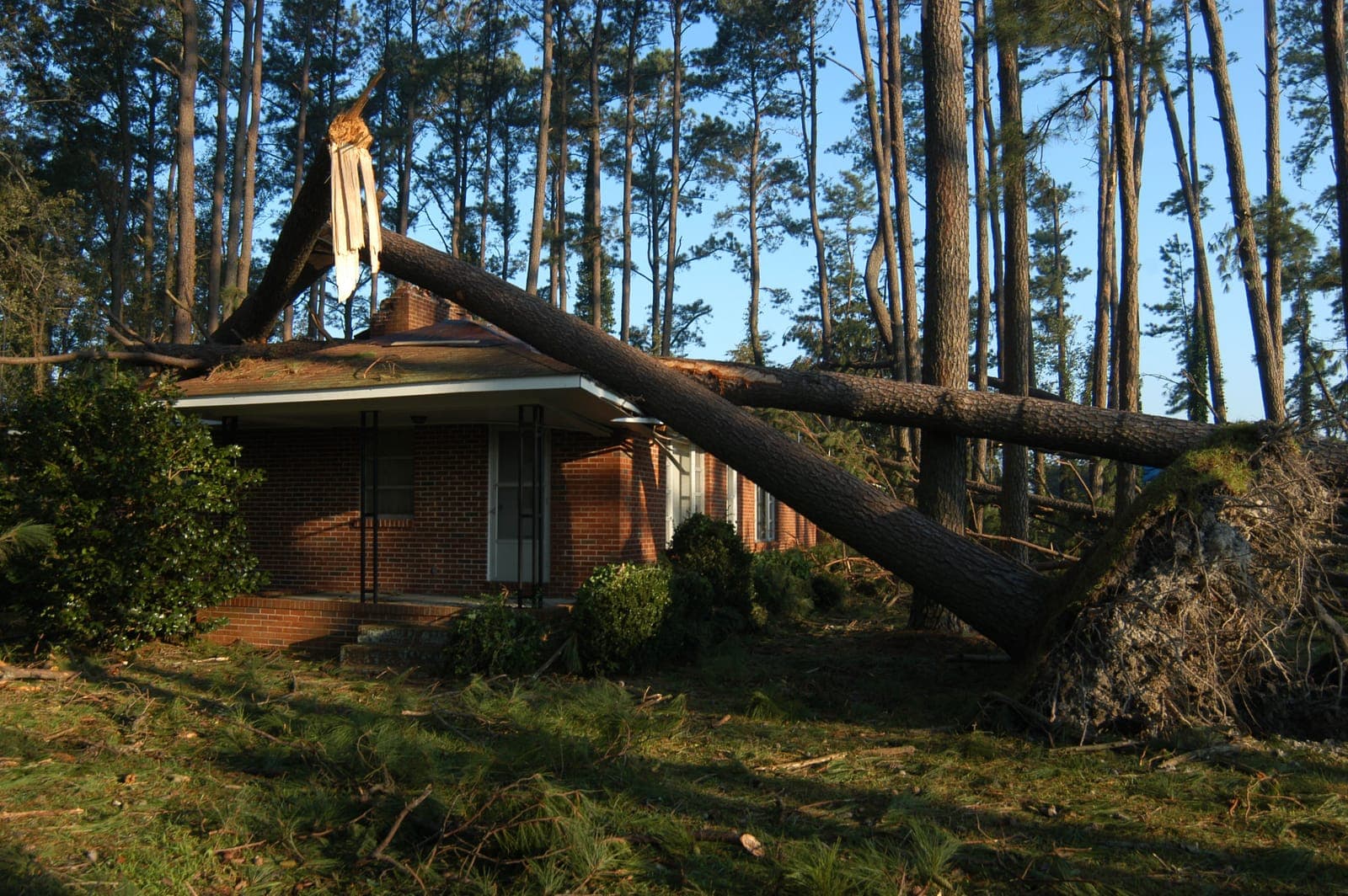
The morning after a storm, the damage you notice first is usually on the ground: a branch across the lawn, twigs all over the driveway. That part is a cleanup job. The damage that matters is more often still up in the tree, and it's easy to walk right under it while you're picking up sticks.
This is a walk-through for the first look: what to check, in what order, and which problems can wait for a calmer week.
The short answer: look from a distance before you walk under anything. Broken branches still hanging in the canopy, fresh splits, a new lean and lifted soil at the base are the things to find. Any of them over the house, the driveway or a play area means keeping people clear until a tree care professional has looked at it.
If a tree or branch is touching a power line, stay at least 30 feet away and assume the line is live, even if your power is out. Call the electric utility. If a tree has come through the roof, there's sparking or fire, or anyone is hurt, call 911 first. Nothing in this guide applies until those are handled.
Not sure what the storm did?
Take three photos from a safe distance: the base, the trunk and the canopy. Get a free preliminary risk read in a few minutes. No account needed.
First, Look Up
Before you start clearing anything, stand well back from each tree and look at the whole canopy. You're looking for branches that broke but didn't fall. Tree workers call them hangers, or widowmakers, and the name is earned: a broken limb resting on other branches can drop without warning when the wind picks up or someone shakes the tree by pulling on a lower branch.
Hangers are hard to see against a busy canopy. Look for leaves that are a different angle or color from the rest, a branch hanging straight down, or bright, freshly torn wood. Check from more than one side.
Then Check the Trunk and the Base
- New cracks or splits, especially where the trunk divides into two or more large stems. Storms often open up a weak fork that has been holding for years.
- Bark torn away where a large branch broke off. A clean break is easier for the tree to deal with than a long strip of bark peeled down the trunk.
- A lean that wasn't there before. Compare it to a photo if you have one. A tree that has always leaned is a different question from one that started leaning last night.
- Soil cracked or lifted on one side of the base, or roots showing that were underground yesterday. That means the root plate moved, and it's one of the most serious things you can find.
For what different kinds of trunk cracks mean, see which cracks in a tree trunk are dangerous. For a new lean, see when a leaning tree is a problem.
What Can Wait and What Can't
Small branches down, tree otherwise intact
Can waitNormal storm cleanup. Pick them up, and have the broken stubs pruned cleanly when it's convenient so they don't decay back into the branch.
A large branch broke off, trunk looks sound
Get it checked soonThe tree will likely recover, but the break should be pruned properly and the rest of the canopy checked for hangers. Sooner if it's over a roof or a path.
A new split in the trunk or a main fork
Get it checked soonA split that opened in a storm can keep opening in the next one. On a large tree near anything that matters, this needs a professional look before the next wind.
Broken limbs still hanging in the canopy
Keep clear, call nowThese can fall at any time. Keep people and cars out from under them, and don't try to pull them down yourself.
Root plate lifted, or a sudden new lean toward something
Keep clear, call nowThe tree's anchorage has failed partway. It can finish failing with little warning, especially in wet soil. Keep everyone out of its reach.
Not sure how serious it is?
Get a free AI risk assessment in minutes
Check My Tree Free →Preliminary screening · Takes 3 photos · No account required
Before Anyone Starts Cutting
Storm-damaged trees are some of the most dangerous wood there is to cut. A tree or limb that's bent, pinned or twisted is loaded like a spring, and when a saw releases that tension the wood can jump in a direction nobody expected. If a downed tree is under tension, resting on another tree, or larger than you'd normally handle, leave it for a crew with the equipment for it.
- Photograph everything first: the tree, the break, anything it hit and where the pieces landed. Insurance questions are much easier with pictures taken before cleanup.
- Keep people and pets away from damaged trees and downed wood until it's been looked at.
- Don't climb a damaged tree or work from a ladder against one.
- Check your homeowner's policy or call your agent before paying for removal. What's covered varies, especially for a tree that fell without hitting a structure.
Hiring Help After a Storm
After a big storm, crews come in from out of the area, and most are legitimate. A few are not. A little care goes a long way:
- Ask for proof of liability and workers' compensation insurance, and check that it's current. If an uninsured worker is hurt on your property, it can become your problem.
- Get the price and the scope in writing: what's being cut, whether the wood and debris are hauled away, and whether the stump is included.
- Be wary of anyone who wants full payment up front, or who pressures you to decide on the spot.
- If the damage isn't urgent, waiting a few days for a local company you can check up on is often the better choice.
A tree that came through the storm looking fine can still have been weakened by it. Over the next few weeks, watch for a lean that slowly gets worse, new cracks, or leaves on one section wilting or dying. Those can show up after the fact. Our warning signs guide covers what to watch for.
Frequently Asked Questions
How do I know if a tree is safe after a storm?
What should I do if a tree is touching a power line?
Can a storm damaged tree be saved?
Should I take photos of storm damage for insurance?
How soon after a storm should I get a tree looked at?
Not sure how serious it is?
Get a free AI risk assessment in minutes
Check My Tree Free →Preliminary screening · Takes 3 photos · No account required
